Starter guide
Technician privileges and frequencies, made simple
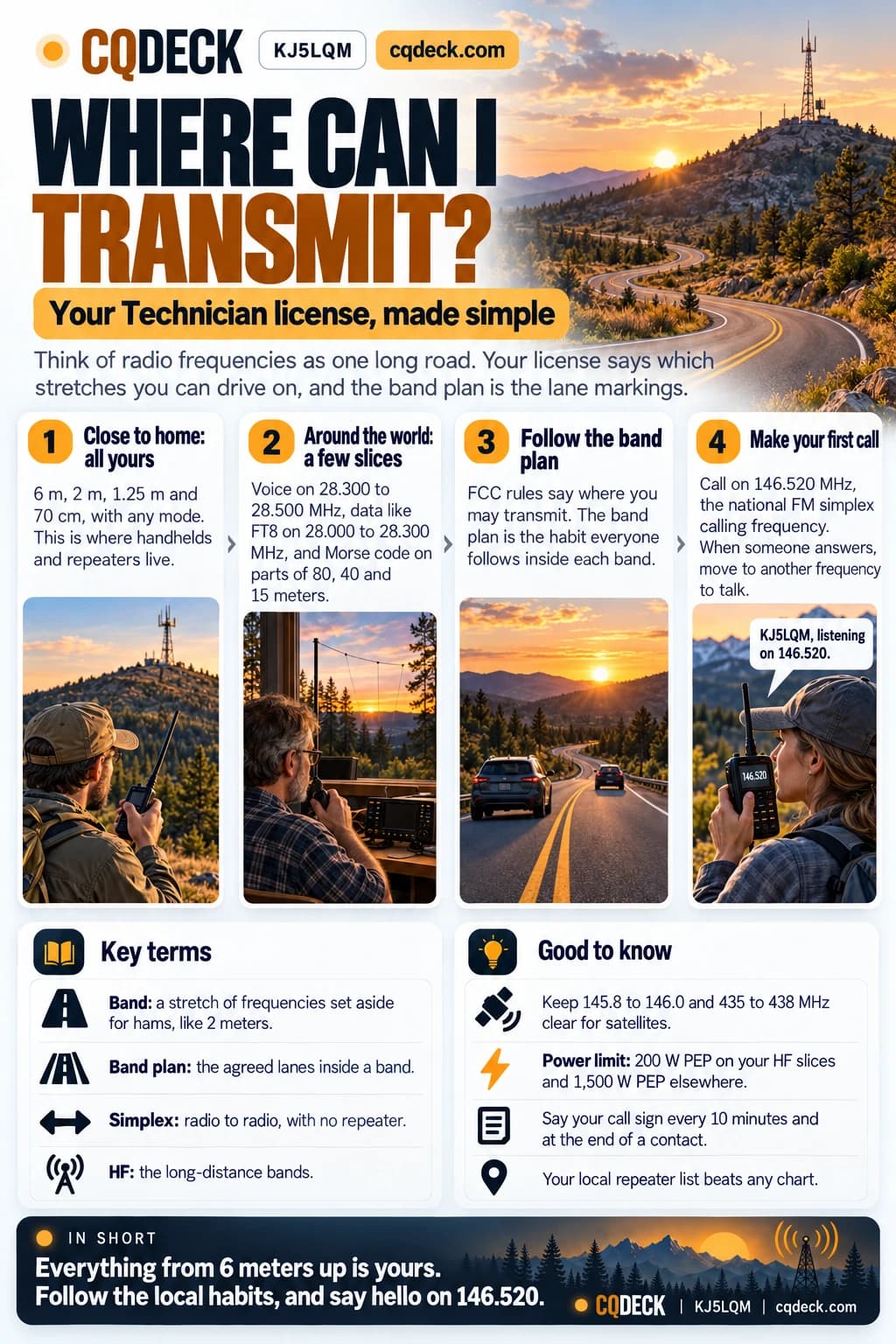
Think of all the radio frequencies as one long road. Your license says which stretches of that road you can drive on. The is the lane markings, so people doing different things don’t bump into each other. That’s really all there is to it.
Printed from www.cqdeck.com/learn/technician-band-plan. The page always has the latest version.
Which stretches are yours
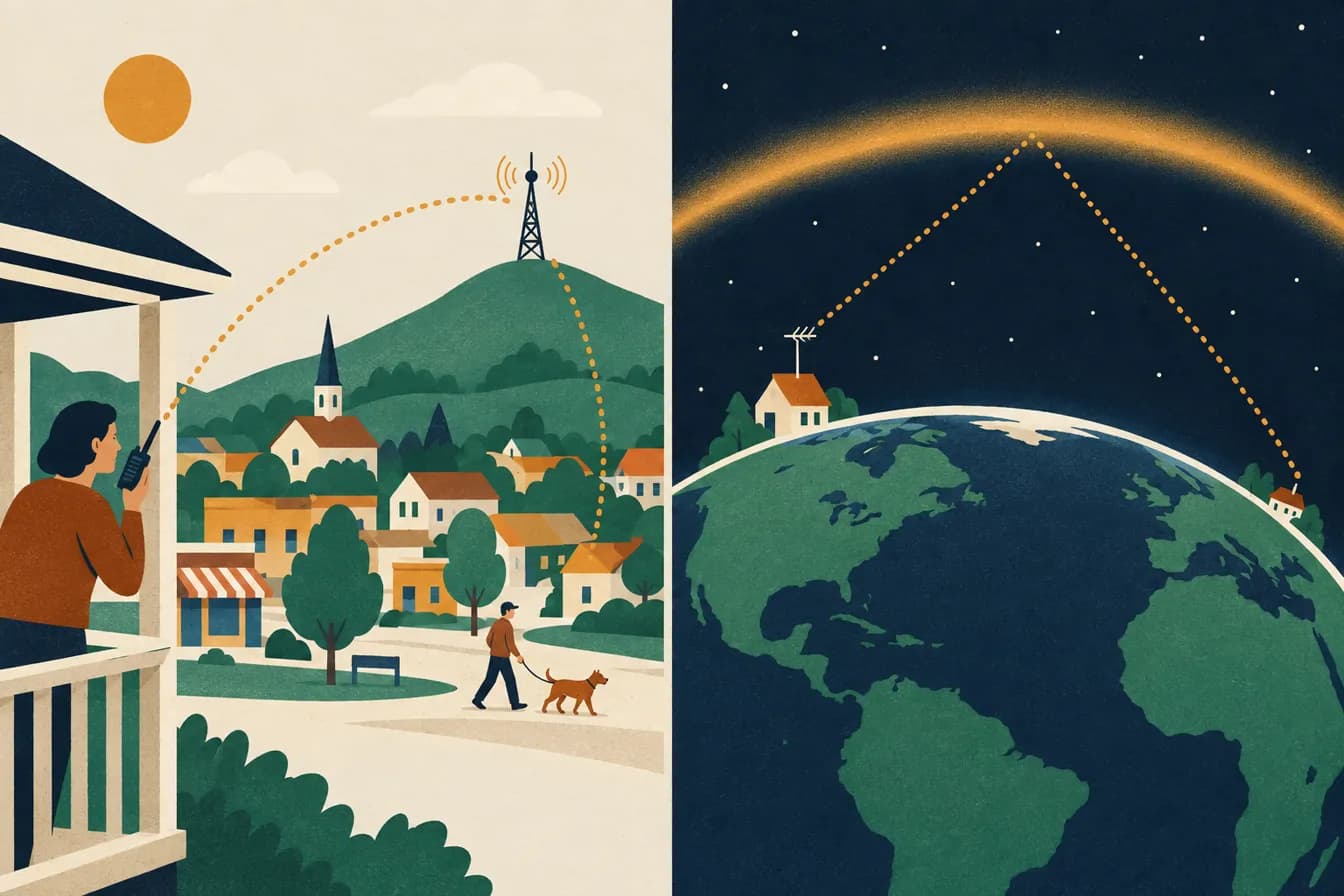
The road has two kinds of stretches: the ones that stay close to home, and the ones that can reach around the world.
- Close to home (6 m, 2 m, 1.25 m and 70 cm): all yours, with any kind of signal. A handheld reaches a few miles on its own, and much farther through a on a hill.
- Around the world (): mostly for higher license classes. You get a few small slices, including voice on part of 10 meters.
Show the full chart, band by band
Each bar is a whole band. Colored parts are where a Technician may transmit, and the color says which kinds of signal. Grey parts need a General license.
- All modes
- CW and voice
- CW and data
- CW only
- Needs a General license
HF: signals can bounce off the ionosphere
- 160 m1.8–2 MHzNeeds a General license.
- 80 m3.5–4 MHzCW only, 3.525–3.600 MHz.
- 60 m5.33–5.41 MHzNeeds a General license.
- 40 m7–7.3 MHzCW only, 7.025–7.125 MHz.
- 30 m10.1–10.15 MHzNeeds a General license.
- 20 m14–14.35 MHzNeeds a General license.
- 17 m18.068–18.168 MHzNeeds a General license.
- 15 m21–21.45 MHzCW only, 21.025–21.200 MHz.
- 12 m24.89–24.99 MHzNeeds a General license.
- 10 m28–29.7 MHzCW and data 28.000–28.300 MHz. Voice (SSB) and CW 28.300–28.500 MHz.
VHF and UHF: line of sight, repeaters and satellites
- 6 m50–54 MHzAll modes, 50–54 MHz.
- 2 m144–148 MHzAll modes, 144–148 MHz. Home of local FM repeaters.
- 1.25 m222–225 MHzAll modes, 222–225 MHz.
- 70 cm420–450 MHzAll modes, 420–450 MHz. Repeaters and FM satellites.
Rules and lane markings
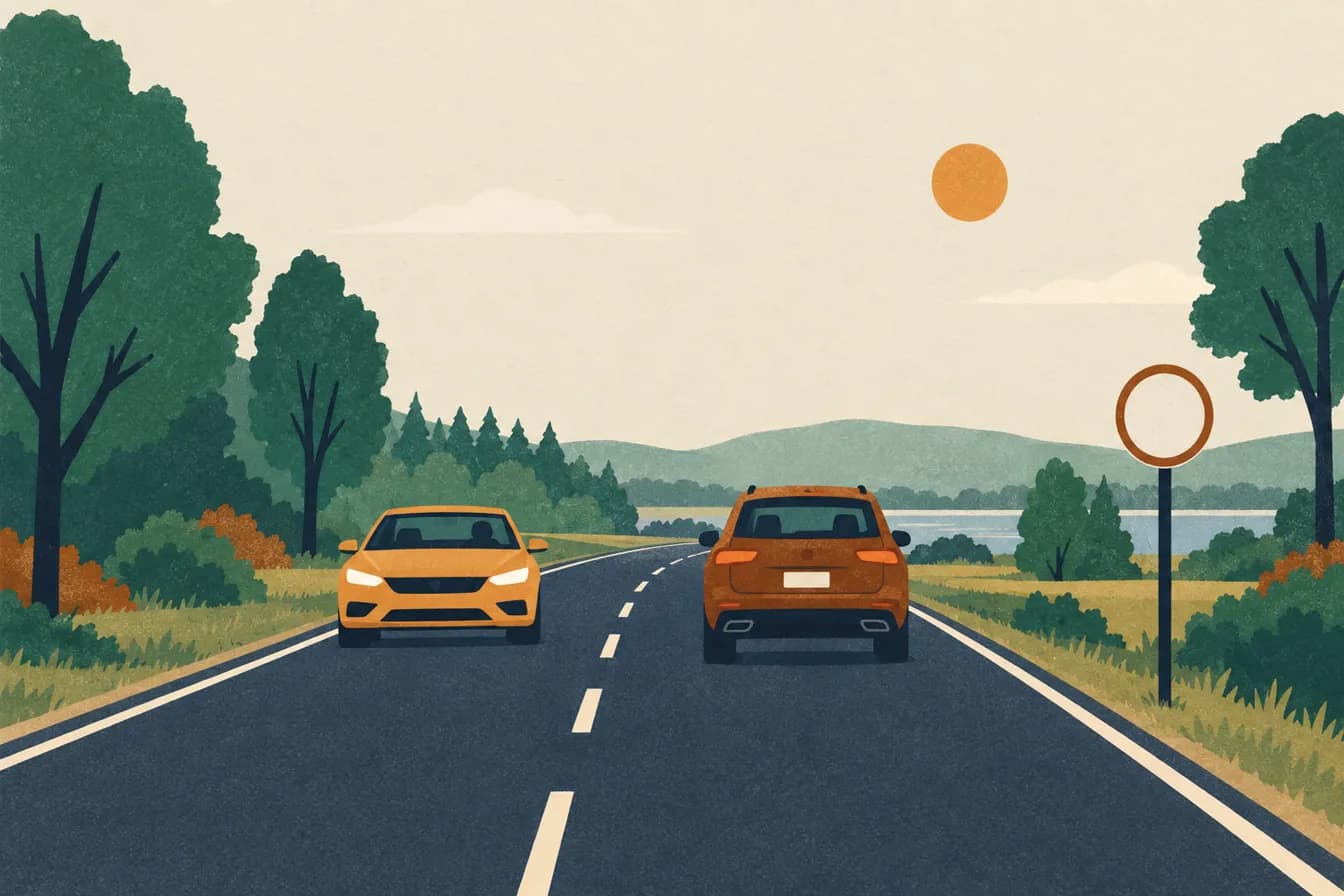
- The FCC rules are the law, like speed limits. They decide where your license lets you transmit.
- The is a habit everyone agrees on, like keeping to your lane. Nobody gets a ticket for ignoring it, but you could spoil someone else’s contact, and people notice.
- Every area tweaks the plan a little. Your local repeater list is the best guide.
Your first call, radio to radio
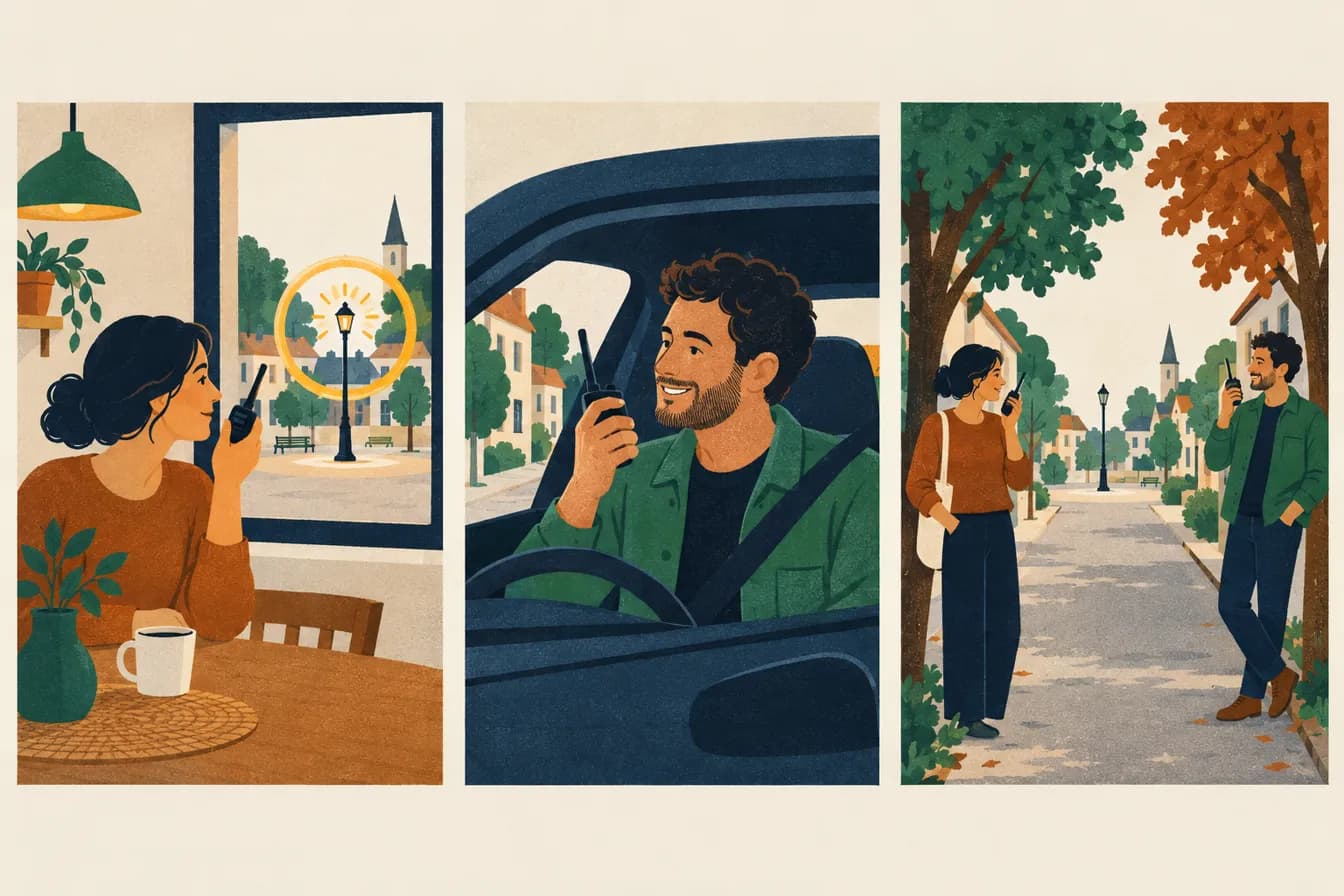
On 2 meters there’s one spot everyone knows, like the clock in a town square. Here’s how to use it for a call (radio to radio, no repeater).
- Tune to 146.520 MHz, the national calling spot.
- Say your call sign and that you’re listening: “N0CALL, listening on 146.520.”
- When someone answers, pick another frequency together and move there to talk, so the calling spot stays free.
How a repeater gets you farther
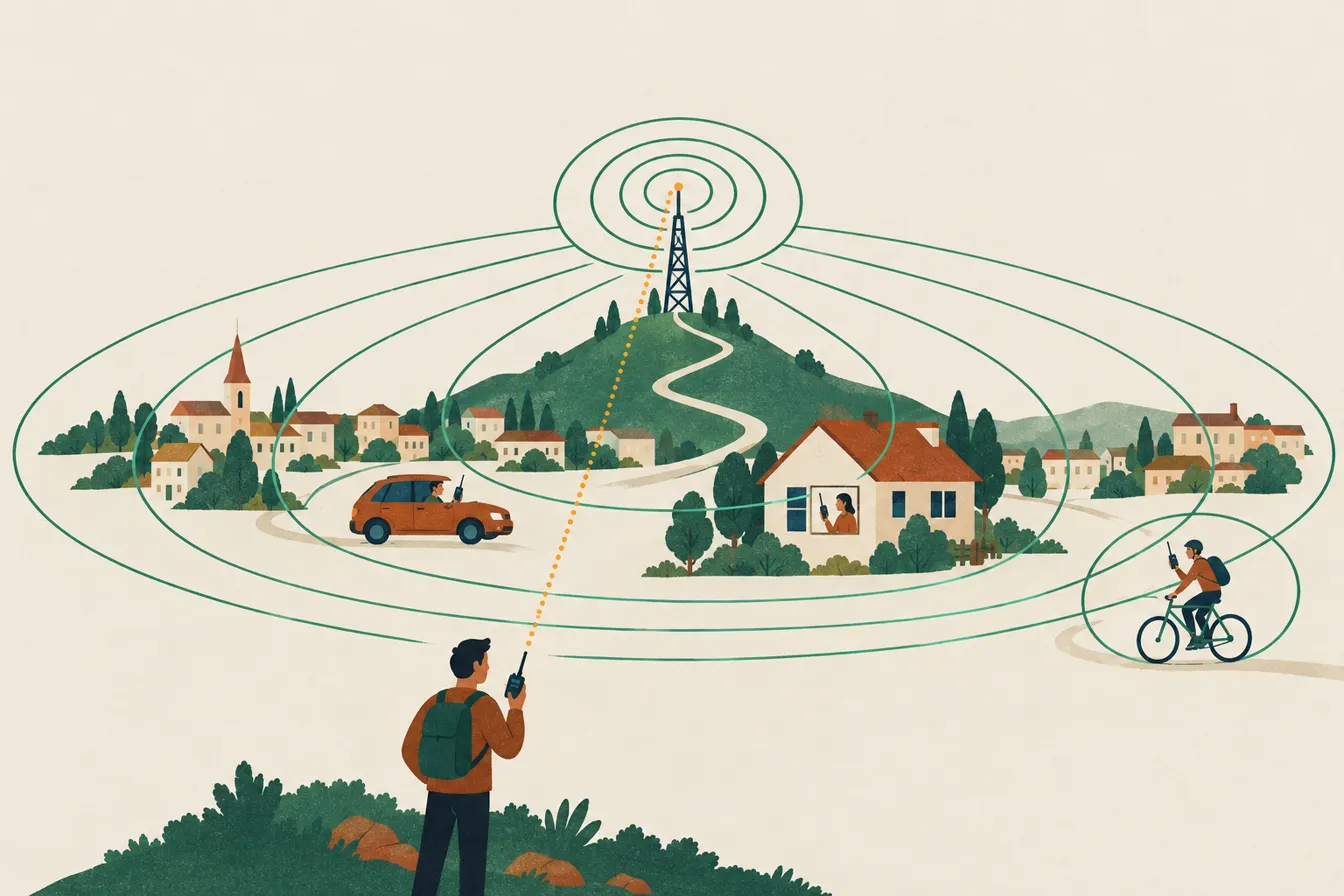
A sits up high. It hears you on one frequency and repeats you on another, so everyone for miles around can hear you.
- The gap between the two frequencies is called the . Most radios set it for you when you pick a repeater from a list.
- Many repeaters also need a . Your local repeater list gives it.
Try itRepeater etiquette
Keep the satellite lanes clear
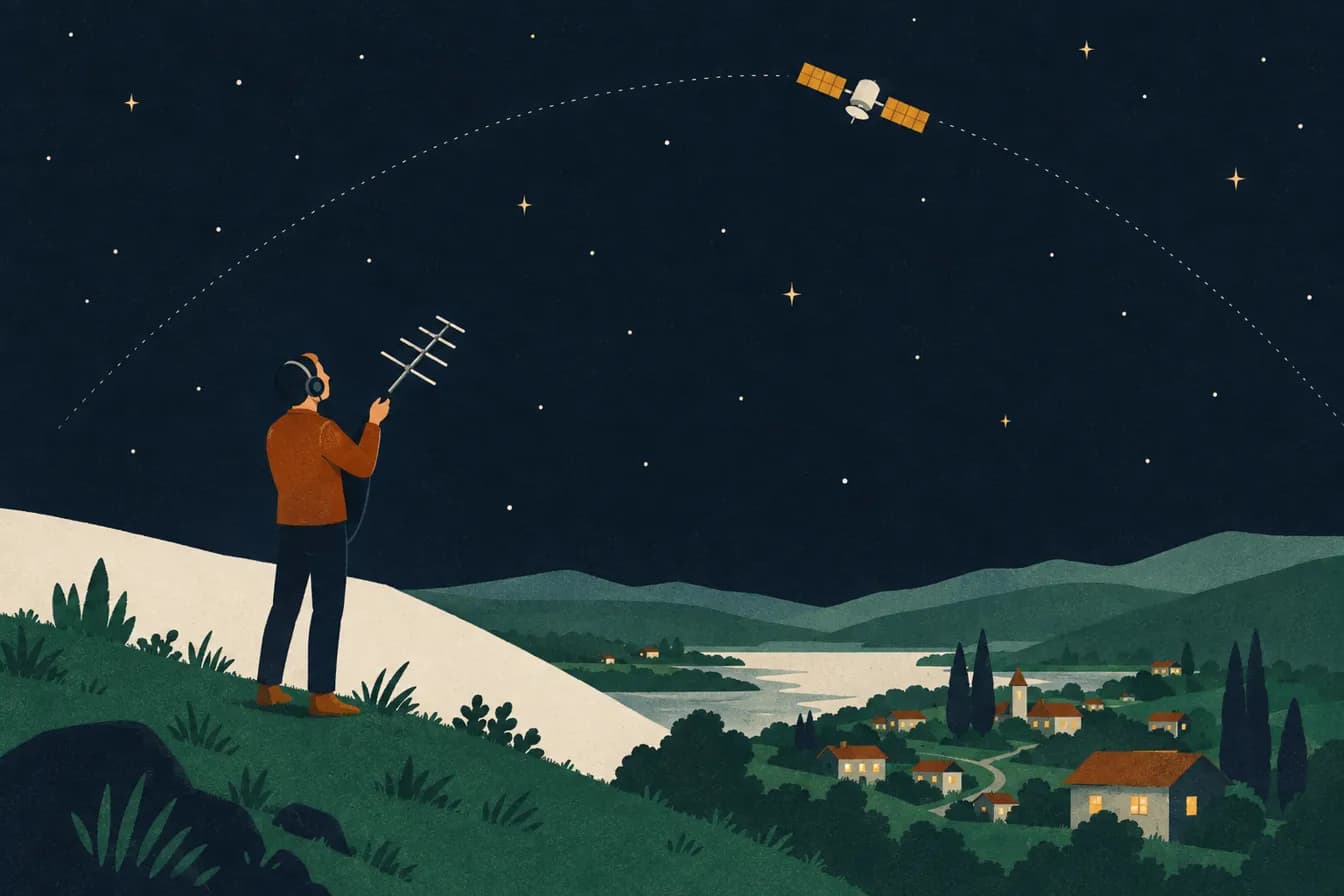
Small parts of 2 meters and 70 centimeters are kept for satellites. They often sound empty, but a satellite could be passing over someone nearby, so don’t chat there.
Show where everything goes on 2 m and 70 cm
The ARRL band plan, simplified. Colored zones show what each part of the band is for.
2 meters: the band plan
| MHz | Used for |
|---|---|
| 144.000–144.100 | CW only (an FCC rule) |
| 144.100–144.275 | SSB and weak signals |
| 144.275–144.300 | Propagation beacons |
| 144.300–144.500 | Satellites |
| 144.500–144.600 | Linear translator inputs |
| 144.600–144.900 | Repeater inputs |
| 144.900–145.100 | Weak signal and FM simplex |
| 145.100–145.200 | Linear translator outputs |
| 145.200–145.500 | Repeater outputs |
| 145.500–145.800 | Experimental modes |
| 145.800–146.000 | Satellites |
| 146.000–146.400 | Repeater inputs |
| 146.400–146.600 | FM simplex |
| 146.600–147.400 | Repeater outputs |
| 147.400–147.600 | FM simplex |
| 147.600–148.000 | Repeater inputs |
70 centimeters: the band plan
| MHz | Used for |
|---|---|
| 420.000–432.000 | Amateur TV and links |
| 432.000–433.000 | CW, SSB and weak signals |
| 433.000–435.000 | Links |
| 435.000–438.000 | Satellites only |
| 438.000–442.000 | Amateur TV and links |
| 442.000–445.000 | Repeaters (local option) |
| 445.000–447.000 | Simplex, links and repeaters |
| 447.000–450.000 | Repeaters (local option) |
Talking far away on 10 meters
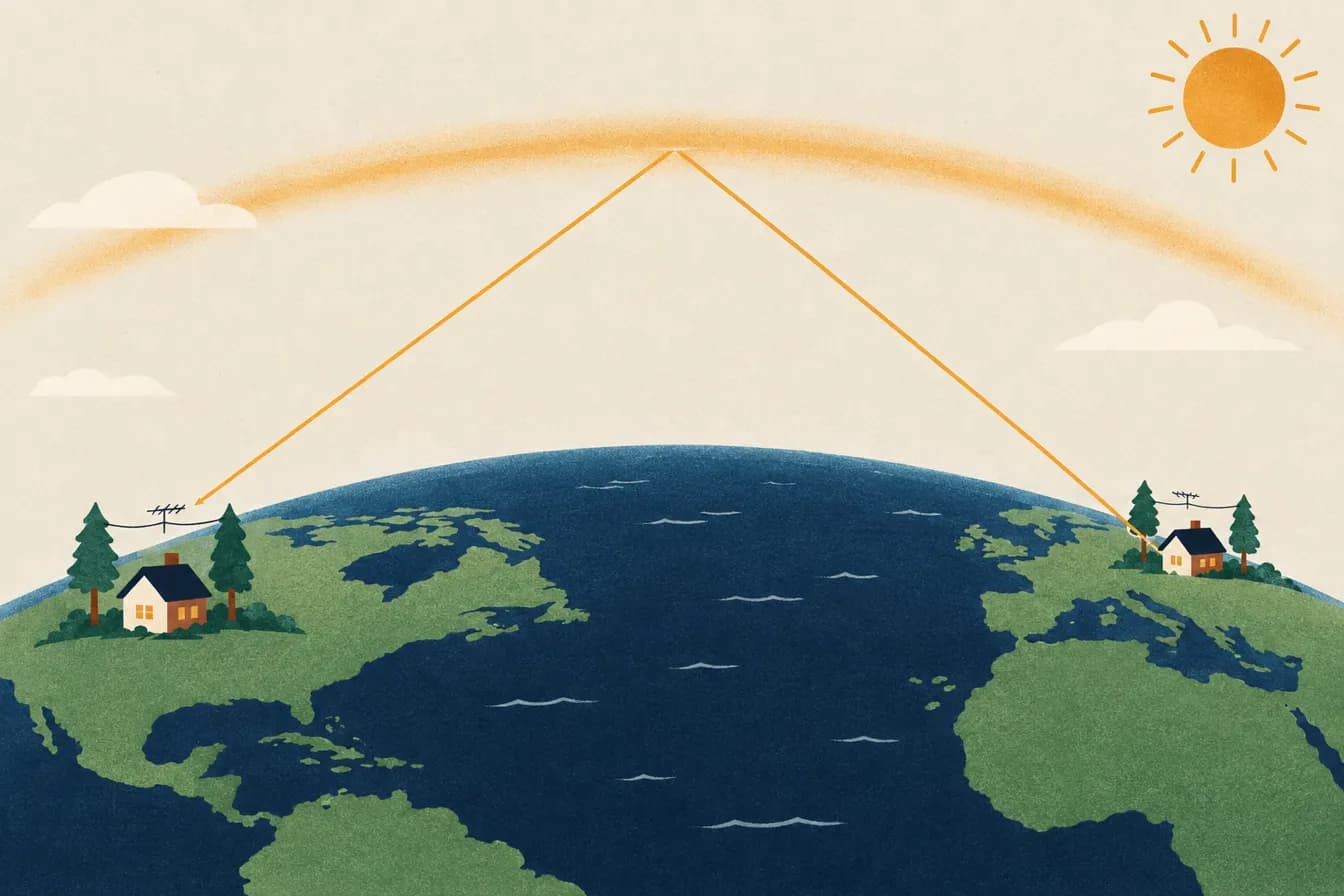
On part of 10 meters (28.300 to 28.500 MHz) you can talk by voice to other countries. The signal bounces off a layer high in the sky that the sun charges up.
- When the sun is busy, a simple wire antenna can reach across an ocean.
- When the sun is quiet, 10 meters can sound empty for days. That’s normal.
- You also get slices of 80, 40 and 15 meters for Morse code.
Show all your long-distance slices
| Band | MHz | What you can send |
|---|---|---|
| 10 m | 28.000–28.300 | Morse code and data, such as FT8 (28.074) |
| 10 m | 28.300–28.500 | Voice and Morse code |
| 15 m | 21.025–21.200 | Morse code only |
| 40 m | 7.025–7.125 | Morse code only |
| 80 m | 3.525–3.600 | Morse code only |
How much power can I use?
More than you’ll ever need. A handheld puts out 5 to 8 watts. The limit is 1,500 watts on most bands and 200 watts on your long-distance slices. The real rule is simpler: use only as much power as you need.
Show the fine print
- FCC limits are in , a radio’s output at the peak of a signal (FCC rule 97.313).
- Near some military sites, the limit on 70 cm is 50 watts.
Try it on your deck
Your dashboard’s band chart shows these same privileges with today’s conditions, and the tuning dial on the home page tells you whether you can use any frequency.